Healthy Dental Practices for Pets
Dental Health Habits in Pets Dental health plays a major role in a pet’s overall well-being. Unfortunately, it often goes unnoticed until problems appear. Plaque, tartar, and gum disease can cause pain and infection. Over time, they may also affect the heart, liver, and kidneys. With consistent dental care, you can prevent most dental issues…
Dental Health Habits in Pets
Dental health plays a major role in a pet’s overall well-being. Unfortunately, it often goes unnoticed until problems appear. Plaque, tartar, and gum disease can cause pain and infection. Over time, they may also affect the heart, liver, and kidneys. With consistent dental care, you can prevent most dental issues and improve your pet’s quality of life.
Why Dental Care Matters for Pets
Pets use their mouths every day. They eat, play, and explore using their teeth. As a result, bacteria build up quickly. Without proper cleaning, plaque hardens into tartar. This leads to gum inflammation and tooth decay.
Early dental care reduces long-term health risks. It also helps pets stay comfortable and active.
The “VOHC” Seal of Approval
The single most important thing a pet owner can look for is the VOHC (Veterinary Oral Health Council) Seal.
- The Detail: There are thousands of “dental” treats on the market, the VOHC seal is only given to products that have been scientifically proven to reduce plaque or tartar by at least 15–20%.
- The Advice: Tell readers to flip the bag over and look for that specific logo. It turns a “marketing claim” into a “proven fact.”
Recognizing Signs of Dental Problems
Dental disease often develops quietly. Therefore, owners should watch for early warning signs.
Common signs include:
- Bad breath
- Red or swollen gums
- Yellow or brown buildup on teeth
- Drooling or pawing at the mouth
- Difficulty eating
If you notice these changes, dental care should not be delayed.
The “Silent” Warning Sign: Selective Eating
Your draft mentions “difficulty eating,” but it’s often more subtle than that.
- The Detail: Many pets won’t stop eating because of dental pain (their survival instinct is too strong). Instead, they become “selective eaters.” They might suddenly start swallowing kibble whole, eating only on one side of their mouth, or dropping pieces of food.
- The Advice: Advise owners to watch for “the tilt”—when a dog or cat tilts their head to a weird angle just to chew.
The “Bacteremia” Explanation
We mentioned earlier that dental health affects the heart and kidneys, but explaining how makes it much more convincing.
- The Detail: This is called Bacteremia. When gums are inflamed (Gingivitis), they become a “leaky” barrier. Every time the pet chews, bacteria from the mouth are pushed directly into the bloodstream. These bacteria then travel to the heart valves and kidneys, causing permanent scarring and damage over time.
Brushing Your Pet’s Teeth Regularly
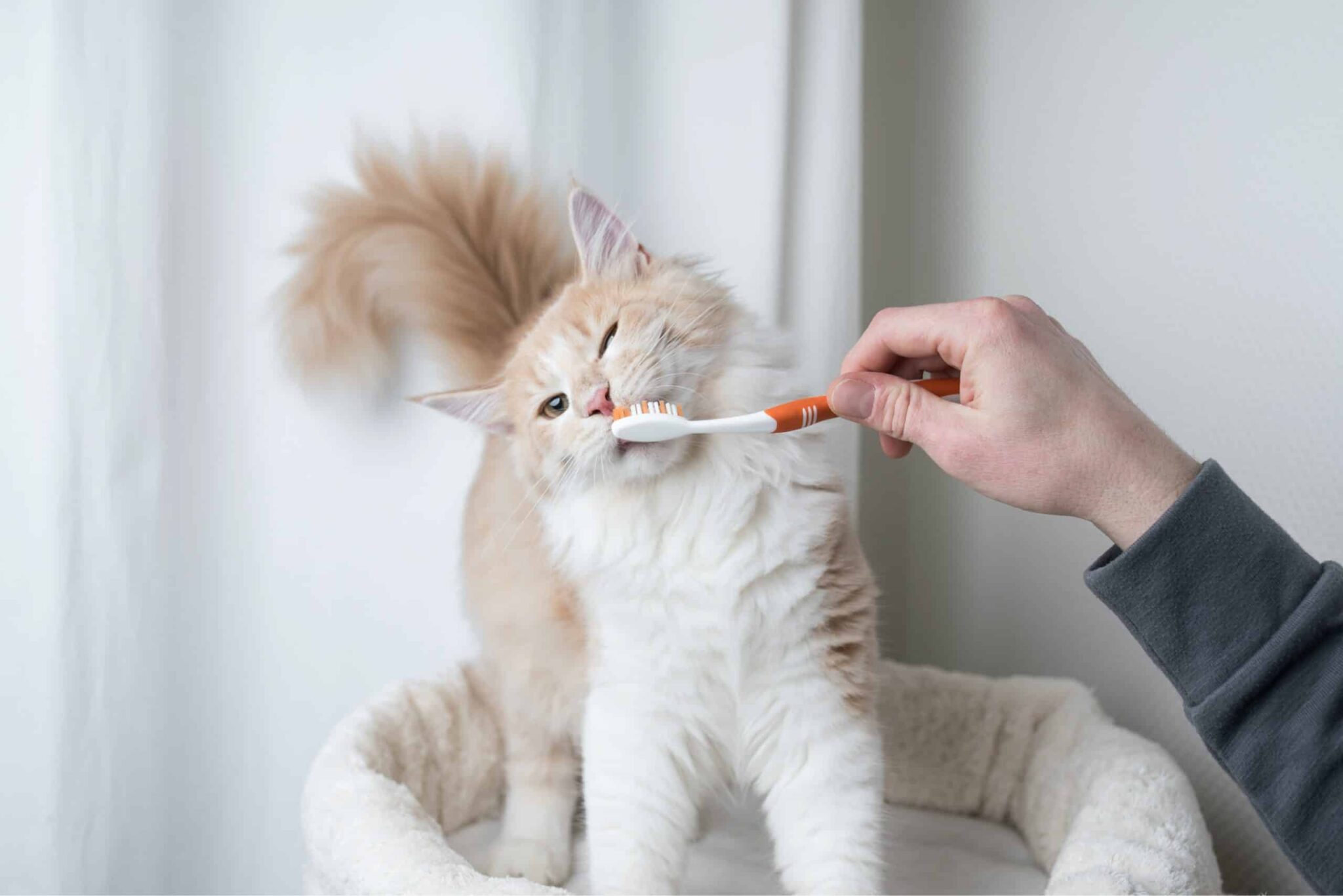
Brushing remains the most effective dental practice for your pet. It removes plaque before it turns into tartar.
Use a pet-specific toothbrush and toothpaste. Human toothpaste can be harmful. Start slowly and keep sessions short. Over time, brushing becomes part of the routine.
Ideally, brush your pet’s teeth several times a week. Daily brushing offers the best protection.
Alternatives for “Anti-Brush” Pets
Let’s be real: not every pet allows a toothbrush in their mouth. Adding alternatives makes the advice feel more practical.
- Water Additives: These are tasteless liquids you add to the water bowl that help break down the “biofilm” (the slimy layer of bacteria) before it turns into plaque.
- Dental Gels: If a pet won’t let you brush, mention enzymatic gels. You just wipe a small amount on their gums or lips, and the pet’s own saliva spreads the enzymes around to “digest” the plaque.
Dental Chews and Toys
Dental chews help reduce plaque mechanically. They also encourage chewing, which supports gum health.
Choose chews designed for pets. Avoid overly hard items that may fracture teeth. Toys with textured surfaces can also support oral hygiene when used regularly.
However, chews should support brushing, not replace it.
Diet and Dental Health
What pets eat affects their teeth. Soft foods stick to teeth more easily. Dry kibble helps reduce buildup slightly through chewing.
Some diets support dental health specifically. These foods have textures designed to clean teeth gently. Clean water also plays a role by washing away food particles.
Balanced nutrition supports both oral and overall health.
Professional Dental Checkups
Home care alone is not always enough. Professional dental exams allow vets to detect hidden problems.
During checkups, vets may recommend dental cleaning. This removes hardened tartar and treats gum disease. Regular evaluations prevent severe complications later.
Annual dental assessments work well for most pets.
The “Lift the Lip” Weekly Check
Encourage a simple habit that doesn’t involve tools.
- The Routine: Once a week, owners should lift their pet’s lip and look at the back molars. Tartar usually starts at the very back where it’s hard to see.
- What to look for: A thin red line along the gumline. This is the “alarm bell” that tells an owner it’s time for a professional cleaning before a tooth is lost.
Preventive Habits at Home
Consistency makes dental care effective. Small habits add up over time.
Introduce dental care early in life. Maintain a routine. Keep dental tools accessible. Monitor your pet’s mouth during grooming or play.
Prevention reduces discomfort and medical costs.
Final Thoughts
Healthy dental practices protect more than teeth. They support long-term health, comfort, and longevity. With regular brushing, smart product choices, and professional guidance, pets can maintain strong teeth and healthy gums throughout their lives.
Quick Tips
- Toothpaste: Must be enzymatic (it works chemically, not just mechanically).
- Toys: Use the “Thumbnail Test”—if you can’t make a small dent in the toy with your thumbnail, it is too hard and might snap the pet’s teeth. (Common culprits: Deer antlers and dried bones).