Total Grooming Management Protocols for Dogs and Cats
The Science of Grooming: Advanced Maintenance Protocols Grooming is far more than an aesthetic preference; it is a fundamental healthcare requirement. As the first line of defense for the integumentary system, proper grooming maintains skin integrity, aids thermoregulation, and allows for the early clinical detection of parasites and dermatological abnormalities. Biological Foundations: Why We Groom…
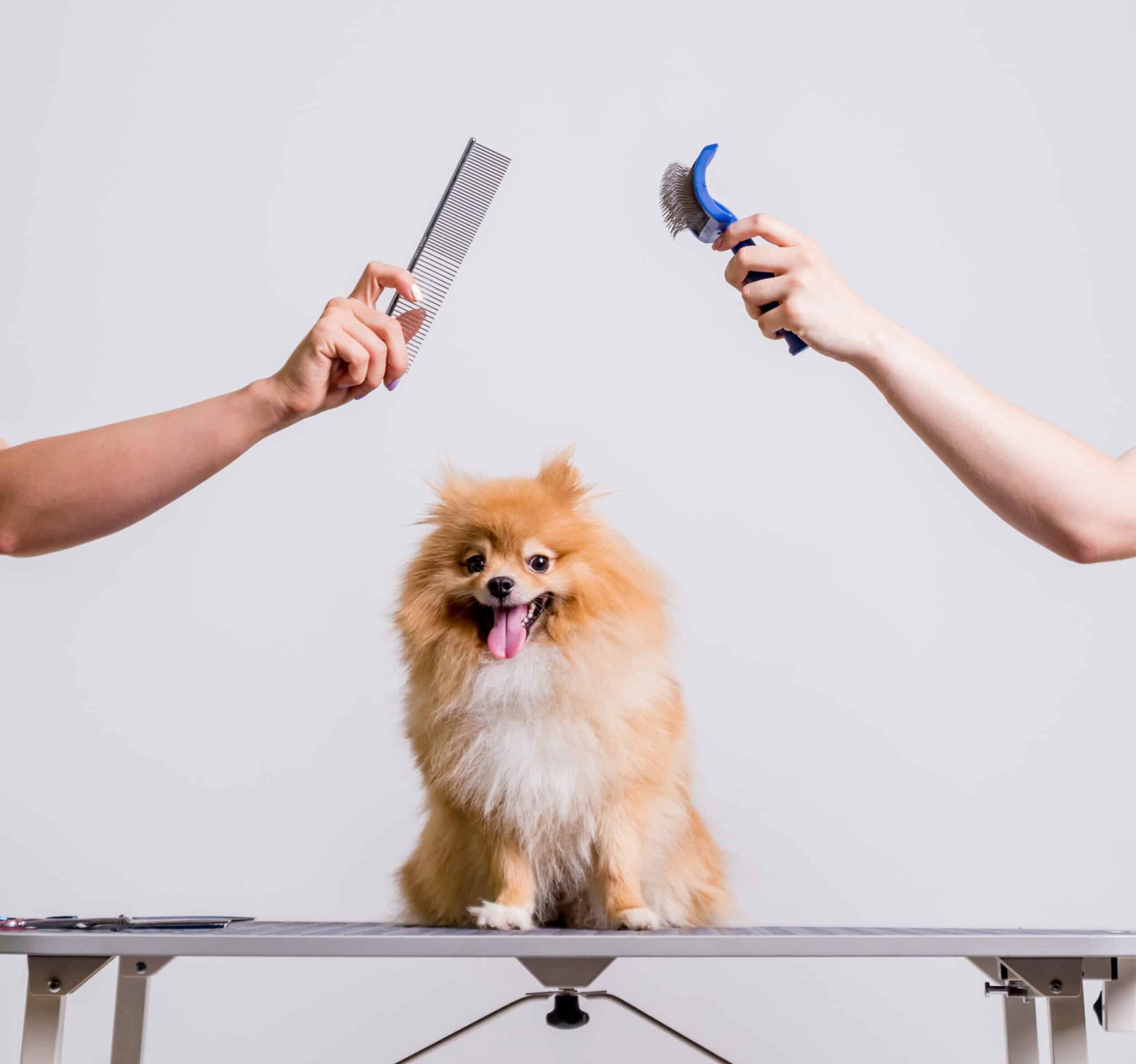
The Science of Grooming: Advanced Maintenance Protocols
Grooming is far more than an aesthetic preference; it is a fundamental healthcare requirement. As the first line of defense for the integumentary system, proper grooming maintains skin integrity, aids thermoregulation, and allows for the early clinical detection of parasites and dermatological abnormalities.
Biological Foundations: Why We Groom
Systematic grooming provides four critical physiological benefits:
- Dermatological Integrity: By removing necrotic hair and skin cells, grooming allows the dermis to breathe and facilitates the even distribution of sebum (natural oils).
- Thermoregulation: In double-coated breeds, a well-brushed undercoat maintains the insulating “air pocket” necessary for temperature control.
- Circulatory Stimulation: The mechanical action of brushing acts as a soft-tissue massage, increasing capillary blood flow to the skin surface.
- Early Diagnostic Opportunity: Regular handling is the most effective way to identify “flea dirt” (hematophagous waste), ticks, or subcutaneous lumps before they escalate into medical emergencies.
The Professional Tool Kit: Selection & Application
Using the incorrect tool can lead to “brush burn” or superficial grooming that leaves the undercoat matted.
| Tool Category | Clinical Application | Target Coat Type |
|---|
| Rubber Curry | Lifts dander/loose hair via circular motion. | Short / Smooth |
|---|
| Slicker Brush | Breaks up minor tangles and removes debris. | All-purpose / Curly |
|---|
| Undercoat Rake | Reaches the dense thermal layer to pull dead fur. | Double-Coated (Husky, Golden) |
|---|
| Pin & Bristle | Smooths the topcoat and distributes natural oils. | Silky / Finishing work |
|---|
| Steel Comb | The “Final Check” tool to ensure no mats remain. | Long-haired Cats / Fine hair |
|---|
| pH-Balanced Shampoo | Maintains the skin’s acid mantle (pH ~7.0). | All Pets (Strictly no human soap) |
|---|
Strategic Brushing Techniques
- Short/Smooth Coats: Brush once weekly in the direction of hair growth. This minimizes shedding and prevents follicular clogging.
- Double Coats (The “Line Brushing” Method): Part the hair and brush from the skin outward. Failure to do this results in “bridging,” where the top looks fine but the skin is suffocating under a felted undercoat.
- Long/Curly Coats: High-maintenance profiles require daily intervention. Curly coats act like “velcro,” trapping environmental debris that quickly hardens into painful mats.
The Clinical Bathing Protocol
Improper bathing is a leading cause of Acute Moist Dermatitis (Hot Spots). Follow this professional sequence:
- The Pre-Wet Barrier: Always remove tangles before the pet gets wet. Water acts as a catalyst that tightens existing mats into “stone knots” that are nearly impossible to remove without clippers.
- Thermal Regulation: Use lukewarm water. A pet’s skin is significantly thinner than human skin; water that feels “comfortably hot” to a human can cause second-degree thermal burns on a dog or cat.
- Lathering & Anatomy: Apply the pet shampoo from the neck backward. Avoid the ocular (eye) and aural (inner ear) areas.
- The Double Rinse: This is the most critical step. If the coat doesn’t “squeak,” soap remains. Residual surfactants are the #1 cause of chemical skin irritation.
- Drying Standards: Pat dry with high-absorbency towels. If using a mechanical dryer, utilize only the “cool” setting to prevent skin dehydration.
Technical Maintenance: Nails, Ears, & Eyes
Precision Nail Trimming
- The Anatomy: Identify the quick (the interior blood vessel).
- Technique: For black nails, trim in 1mm increments. When you see a small, dark grey/moist circle in the center of the cut surface, stop immediately—you have reached the “pre-quick” area.
- Emergency Protocol: Always have styptic powder or cornstarch ready to provide immediate hemostasis if the vessel is nicked.
Sensory Organ Care
- Ocular Maintenance: Use a soft, damp cloth to wipe from the inner corner outward. Yellow or green discharge indicates a potential infection and requires a veterinary exam.
- Aural Hygiene: Use a dedicated veterinary ear cleaner. Fill the canal, massage the base for 30 seconds to emulsify wax, and allow the pet to shake. Wipe only the visible concha; never use Q-tips, as they push debris deeper and risk tympanic membrane (eardrum) rupture.
Post-Flea Treatment & Parasite Synergy
Timing is essential when combining grooming with chemical prevention.
- Topical (Spot-on) Treatments: Apply the 48-Hour Rule. Do not bathe the pet 48 hours before or after application. These products rely on the skin’s lipid (oil) layer to migrate across the body. Stripping these oils via bathing renders the treatment ineffective.
- The Post-Kill Bath: Once an active infestation is neutralized via oral medication (which is systemic and unaffected by bathing), a bath is vital for a pet to remove “flea dirt” and eggs, sanitizing the pet for the home environment.
The “What If”: Risks of Grooming Neglect
Do not failure to maintain a grooming schedule, failure leads to Pelage Matting. This is a serious welfare issue:
- Circulatory Restriction: Severe mats can act as a tourniquet, cutting off blood flow to the skin and extremities.
- Infection Traps: Mats trap moisture against the skin, creating a breeding ground for fungal and bacterial colonies.
- Hidden Trauma: Thick matting can conceal open wounds, abscesses, or even maggot infestations (myiasis) that remain invisible to the owner until they become systemic.
Critical Mistakes to Avoid
- The pH Conflict: Human skin is acidic (pH ~5.5), while pets are neutral (pH ~7.0). Using human products destroys their protective acid mantle, leaving them vulnerable to pathogens.
- Scissors on Mats: Never use scissors to cut out a mat near the skin. The skin is often pulled into the mat; clippers are the only safe tool for de-matting.
- The “Paw Pad” Oversight: Neglecting the hair between the pads allows for “foxtails,” burrs, and fungal infections to take hold in the interdigital spaces.